Where Desizing Ends and Scouring Begins in Cotton Pretreatment
For cotton pretreatment teams, the handoff from desizing to scouring is not a textbook line. It is a production decision made under shift pressure: is the starch-size sufficiently removed for reliable wet-out, or is the next bath being asked to solve a desizing problem?
That decision affects bleaching stability, shade reproducibility, fabric handle, reprocessing load, and chemical cost. A controlled enzymatic desizing stage gives the scouring bath a clearer job: remove natural waxes, pectins, seed-coat residues, and hydrophobic impurities without carrying unresolved size into the rest of the line.
Enzymebridge works as a textile desizing enzyme supplier for fabric mills that need practical pretreatment control, not lab language. The goal is simple: cleaner handoff, steadier absorbency, and fewer surprises downstream.
The practical boundary: starch-size first, cotton impurities next
In woven cotton preparation, desizing is mainly about breaking down and releasing starch-based size from warp yarns. Scouring is about making the cotton substrate uniformly wettable by removing waxes and other natural impurities.
When desizing is incomplete, scouring becomes overloaded. The bath may still produce an acceptable-looking fabric, but the remaining size can show up later as:
- uneven wet-out across the width
- higher risk of patchy bleaching response
- poor liquor penetration in tight constructions
- harsher fabric handle after stronger corrective treatment
- higher reprocessing rates before dyeing
- shade-risk on sensitive colors
The best sequence is not just desize, rinse, scour. It is desize to a defined mill-ready condition, then scour within a window that preserves fabric quality and downstream predictability.
What desizing should achieve before scouring starts
A desizing stage is complete enough for handoff when the fabric no longer behaves like a sized structure in the wet process. Operators should be looking for production indicators, not just a clock time.
1. Consistent wet-out across the fabric width
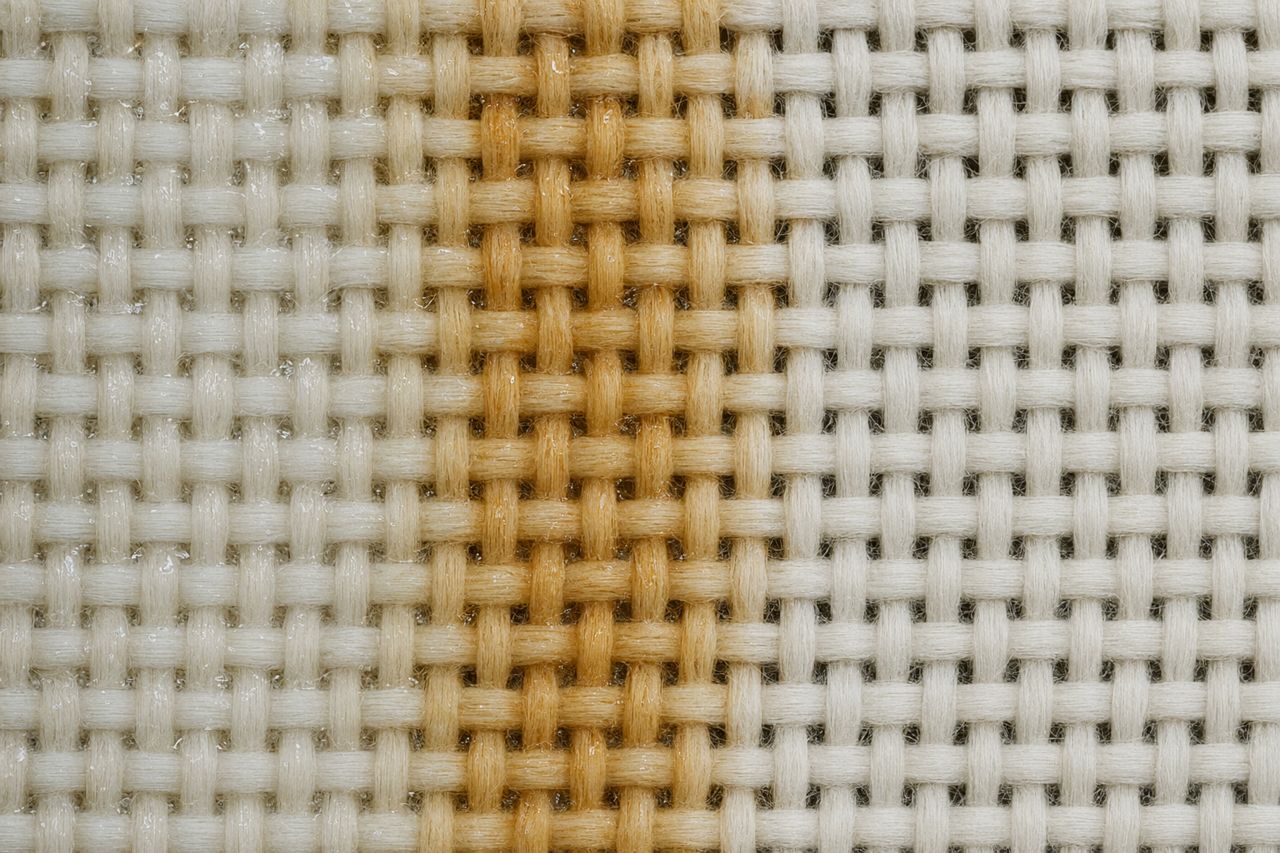
Greige fabric often reveals size retention through uneven wetting. Center-to-selvedge differences, slow sinking behavior, or dry-looking streaks after initial contact can indicate that size is still restricting liquor entry.
A well-matched enzymatic desizing program improves wet-out consistency before scouring. This is especially important on dense shirting, poplin, sheeting, and heavier woven constructions where liquor access can be uneven.
2. Lower mechanical drag and cleaner fabric travel
Residual size can affect fabric movement through washers, saturators, J-boxes, or rope handling systems. Mills may see more tension variation, crease risk, or inconsistent pick-up when the size film has not been sufficiently opened.
Desizing should support smoother fabric travel, not only chemical removal. That matters on continuous ranges where small variations become visible over long lots.
3. Reduced starch load entering scouring
The scouring bath is not the most efficient place to finish starch removal. If high starch load carries forward, caustic and surfactant demand can increase, bath contamination rises, and washer performance becomes more critical.
Good desizing reduces the burden on scouring, helping the next step focus on wax and hydrophobic impurity removal.
4. Stable readiness for bleaching and dyeing
Pretreatment managers usually judge the desize-scour-bleach chain by what happens later. If the dye house reports shade variation, patchy absorbency, or repeated corrective washes, the root cause may be early in the sequence.
The end of desizing should be defined by downstream readiness, not by tradition alone.
Where scouring begins: absorbency, wax removal, and surface preparation
Scouring begins when the process objective shifts from size breakdown to cotton impurity removal. At this point, the fabric should be accessible to liquor and ready for uniform chemical action.
Scouring targets include:
- cotton waxes that resist wetting
- pectins and natural non-cellulosic materials
- seed-coat and field residues
- residual oils and processing soils
- preparation for uniform bleaching response
If the desizing stage is doing its job, scouring can operate with better predictability. That does not always mean lower chemical input on day one. It means the mill has a stronger basis for controlling input, temperature window, liquor ratio, dwell, and washer loading without chasing problems from the previous bath.
Three common handoff problems between desizing and scouring
Problem 1: The mill extends scouring to compensate for weak desizing
This can appear to work, but it often creates hidden cost. Longer or harsher scouring may reduce visible issues while increasing fabric stress, handle change, energy demand, and variability between lots.
A better approach is to strengthen the desizing step so scouring does not become the correction stage.
Problem 2: The sequence is copied across constructions
A lightweight open weave and a compact dense weave do not behave the same. Size add-on, yarn count, twist, fabric density, and loom preparation all influence how easily liquor reaches the size film.
Pretreatment settings should be reviewed by construction group. A desizing enzyme that performs well across a controlled temperature and pH window gives the mill more room to standardize without ignoring fabric differences.
Problem 3: Washer performance is treated separately from chemistry
Desizing chemistry can break down starch-size, but the process still needs release and removal. Inadequate washing, poor counterflow balance, overloaded baths, or short effective dwell can leave solubilized residues in the fabric.
Chemistry and mechanical removal must be managed together. The handoff to scouring improves when desizing, rinsing, and washer loading are considered as one operating zone.
Sequence options mills typically evaluate
There is no single best sequence for every cotton mill. The right choice depends on equipment, construction mix, shade sensitivity, water availability, and production speed.
Enzymatic desize followed by alkaline scouring
This is the standard route for many woven cotton mills. It gives clear separation of duties: enzymatic starch removal first, then alkaline removal of cotton impurities.
This route is useful when the mill wants cleaner process diagnosis. If wet-out remains poor after desizing, the issue is easier to locate and correct before scouring.
Combined desize-scour programs
Some mills consider combined systems where equipment footprint, water use, or scheduling pressure requires fewer stages. Combined processing can be effective, but it needs careful control because two different objectives are being handled in the same zone.
The risk is assuming that acceptable absorbency means complete size removal. For shade-critical programs, mills should confirm that downstream performance remains stable before broad rollout.
Desize, wash, scour, bleach with defined checkpoints
For mills supplying demanding buyers, defined checkpoints reduce argument between departments. Pretreatment can document fabric readiness before dyeing, and quality teams can trace issues by stage.
This approach is especially valuable where audit documentation, lot traceability, and first-time-right dyeing performance are commercial priorities.
Operating variables that influence the handoff
Liquor ratio and fabric loading
Lower liquor ratios can improve efficiency, but they leave less room for residue dilution. If the fabric is heavily sized or tightly constructed, the desizing stage must be tuned so breakdown and removal remain consistent.
Temperature window
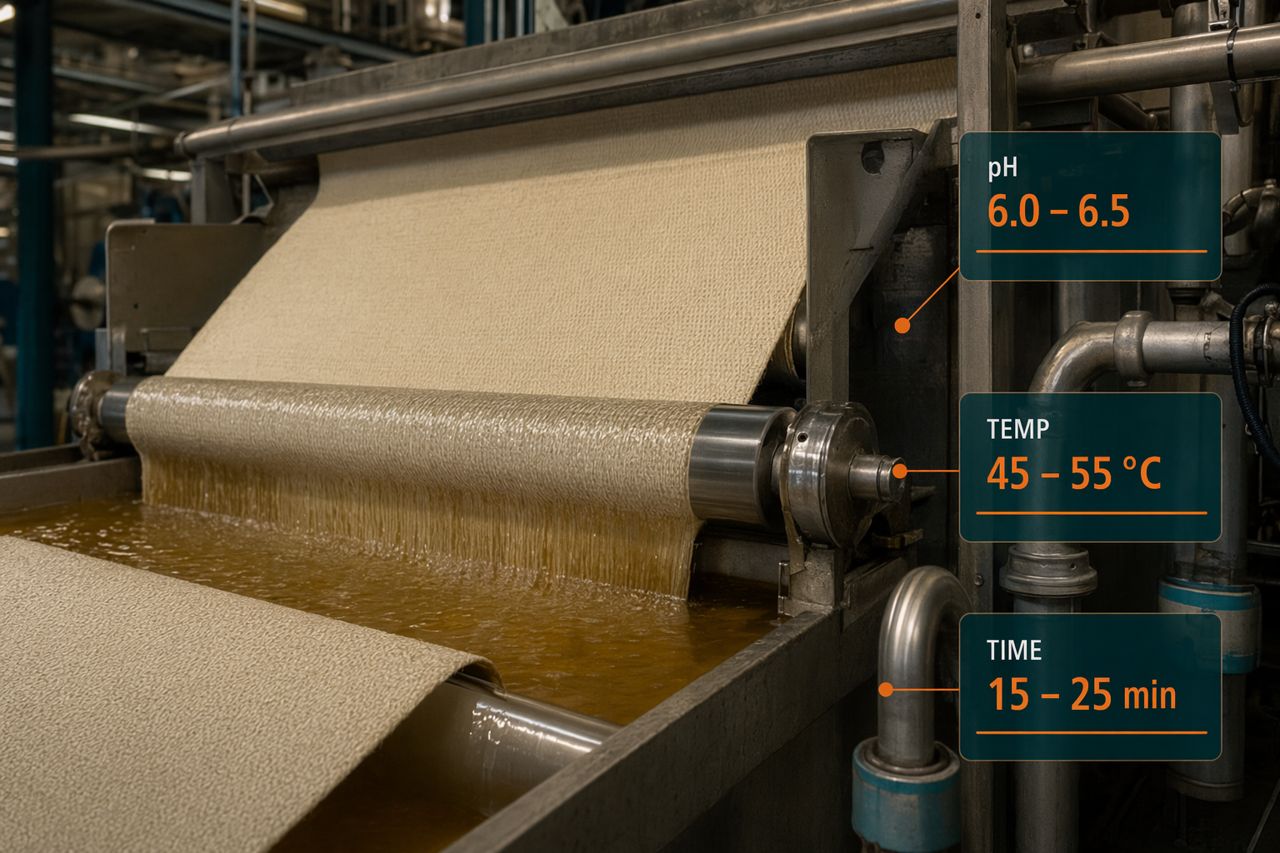
Enzymatic desizing performs best when the mill keeps the bath within the recommended temperature window. Temperature drift can create uneven size breakdown across the lot, especially during start-up, stoppage, or shift change.
pH control
A stable pH window supports predictable enzyme performance. Inconsistent pH can make the same recipe behave differently from batch to batch or range to range.
Dwell and wet pick-up
Adequate dwell only helps if the fabric is evenly wetted and carries the right amount of liquor. Poor pick-up can leave sections under-treated even when total dwell time appears sufficient.
Washing efficiency
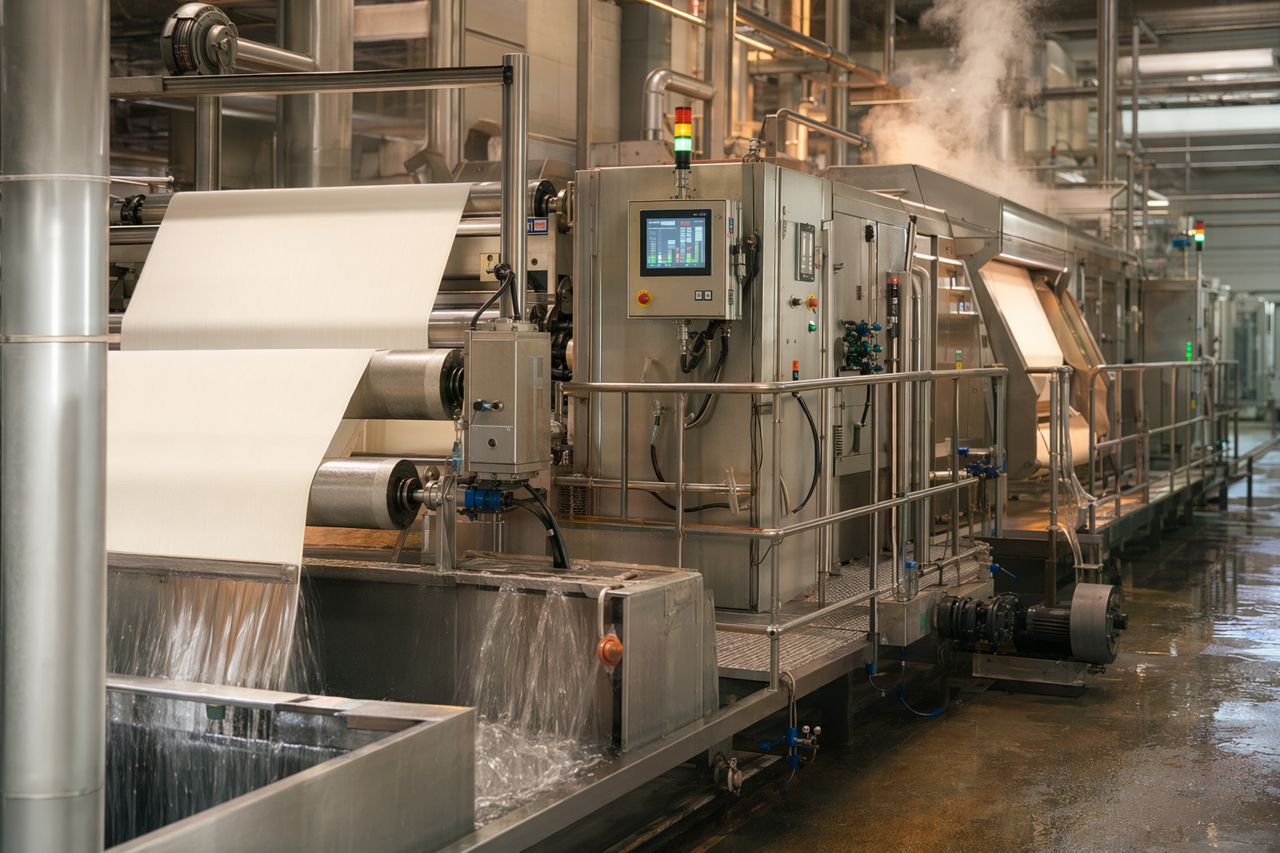
A desized fabric still needs effective washing to remove degraded size and residues. Washer temperature, flow direction, squeezing efficiency, and contamination load all influence the quality of the handoff.
A mill-ready definition of desizing completion
For production use, desizing completion should be defined by practical evidence. A useful handoff checklist may include:
- fabric wets uniformly across width and length
- no recurring selvedge-to-center absorbency gap
- washer discharge is within the mill’s normal control range
- scouring bath is not carrying abnormal starch-related load
- fabric handle remains appropriate for the article
- bleaching response is consistent with the construction history
- dyeing receives fabric with fewer pretreatment-related holds
This definition is stronger than simply saying the desizing stage ran for the required time.
How Enzymebridge supports the desize-scour boundary
Enzymebridge supplies enzymatic desizing solutions for cotton fabric mills that need dependable pretreatment performance under real operating conditions. Our technical discussions focus on the mill variables that decide success: fabric construction, size type, temperature window, pH control, dwell, washer arrangement, liquor ratio, and downstream dyeing requirements.
We help pretreatment teams evaluate:
- where starch removal is actually limiting the line
- whether scouring is being used as a correction stage
- how to set a practical handoff checkpoint
- which constructions need adjusted desizing conditions
- how to reduce reprocessing linked to poor wet-out
- what documentation helps internal quality and buyer audits
The value is not just better desizing. It is a steadier pretreatment chain from greige entry to dyeing readiness.
Request a quote for your cotton pretreatment line
If your mill is seeing inconsistent wet-out, scouring overload, shade-risk, or reprocessing before dyeing, share your fabric constructions and current pretreatment sequence with Enzymebridge.
Request a quote for a desizing enzyme recommendation matched to your equipment, liquor ratio, temperature window, and downstream quality targets.