Rope vs Open-Width Desizing: Practical Control Points for Cotton Mills
For a cotton textile mill, desizing is not a side step. It sets the tone for scouring, bleaching, mercerizing, dyeing, printing, finishing, and final handle. When starch size remains unevenly in the fabric, the downstream process carries the risk: slow wet-out, patchy absorbency, shade variation, harsh handle, and avoidable reprocessing.
Rope and open-width desizing can both deliver reliable starch removal. The right choice depends on your fabric mix, installed equipment, handling risk, liquor movement, dwell control, and how tightly your dyehouse needs pretreatment consistency.
As a textile desizing enzyme supplier for fabric mills, Enzymebridge focuses on the control points that operators can actually manage across shifts: wet-out, liquor access, temperature window, pH stability, hold time, fabric tension, wash-off, and documentation.
The core difference: fabric presentation
Rope desizing
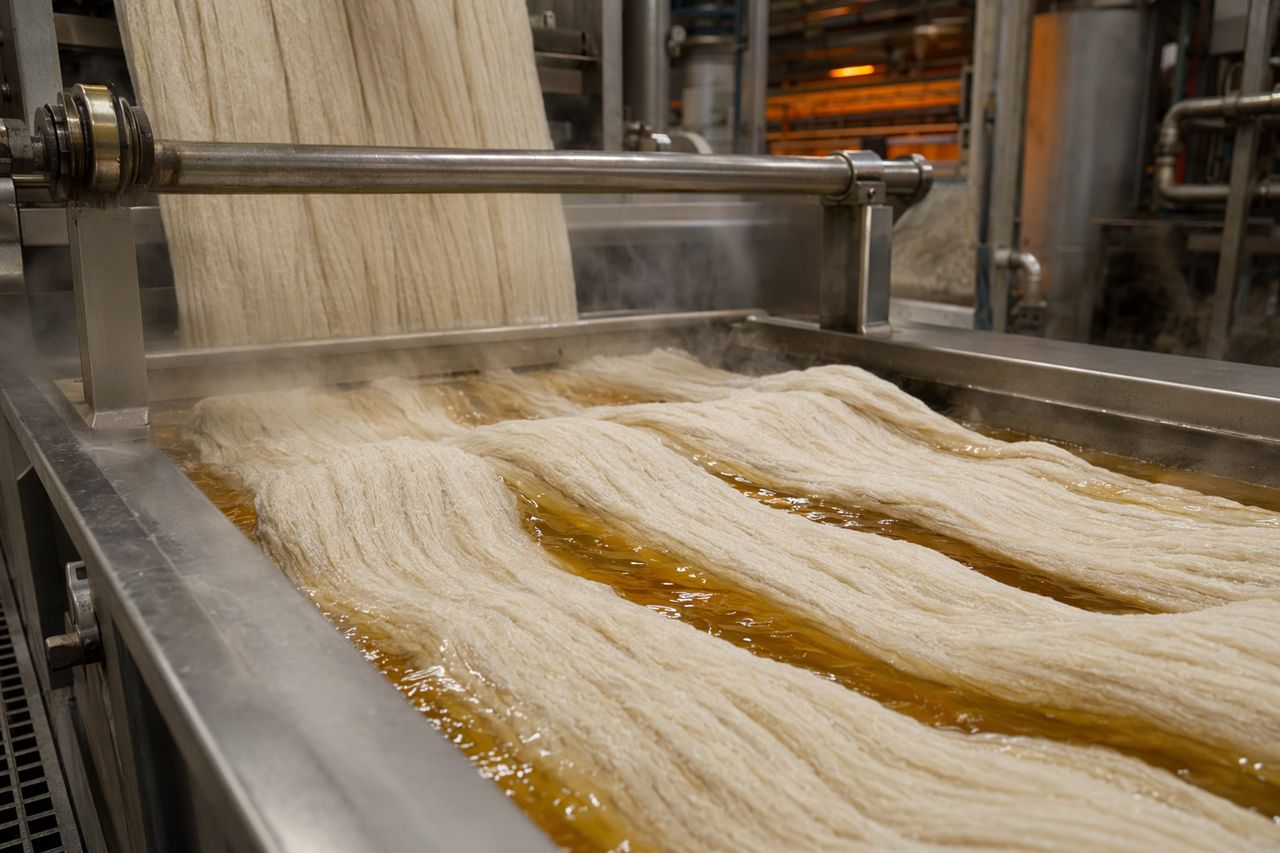
In rope processing, the fabric travels in a compact, twisted form. It can be efficient for high-throughput wet processing and can suit mills already running rope scouring or bleaching lines. The challenge is access. Liquor must penetrate through folds and rope density to reach starch across the full fabric mass.
Rope desizing rewards mills that control loading, rope movement, circulation, temperature ramping, and wash-off discipline.
Open-width desizing
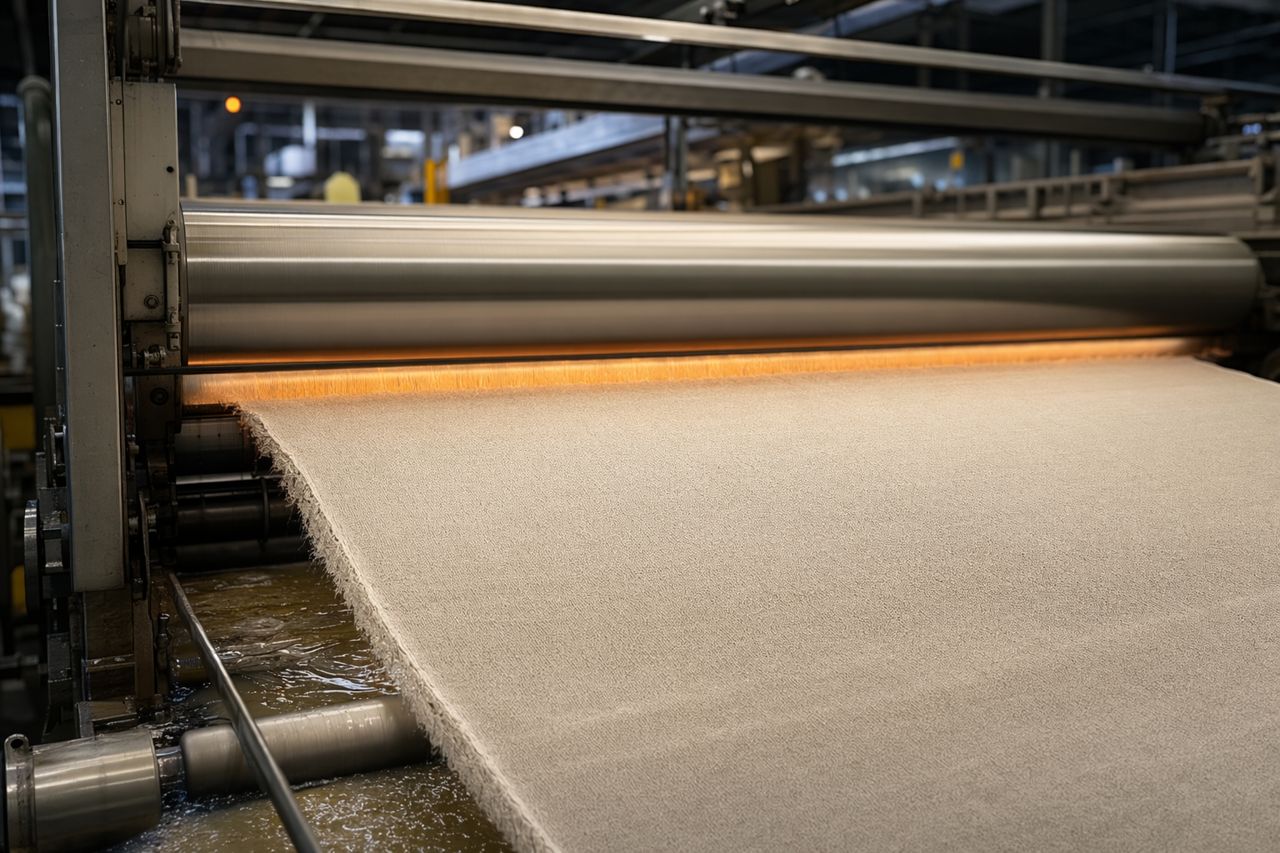
In open-width processing, the fabric is spread and presented flat. This improves visual control and supports more uniform liquor contact across the width. It can reduce fold-related variability and make it easier to manage tension-sensitive fabrics.
Open-width desizing rewards mills that control padding uniformity, edge-to-center wet pick-up, dwell consistency, and widthwise washing.
When rope desizing works well
Rope desizing is often practical when the mill needs continuous throughput and the fabric construction tolerates rope movement. It can be a strong option when operators maintain good bath exchange and avoid compacted rope loading.
Key control points:
- Rope density: Overloaded rope limits liquor access and creates starch carryover in the inner folds.
- Liquor movement: Consistent circulation reduces dead zones and improves wet-out through the fabric mass.
- Dwell discipline: The enzyme needs enough contact time with the starch film; shortcutting dwell increases reprocessing risk.
- Temperature window: A stable window is more important than aggressive heating. Sudden drift can reduce process consistency.
- Wash-off after desizing: Broken-down starch must be removed, not simply loosened. Incomplete washing can still interfere with dyeing.
- Batch traceability: Document fabric style, size load expectation, dwell, pH trend, temperature trend, and wash sequence for audit-ready control.
Where rope desizing can create risk
Rope processing can hide problems until later. A fabric may look acceptable after desizing but still carry uneven absorbency into dyeing.
Watch for:
- Slow sink or inconsistent wet-out across sampled sections
- Inner-fold starch residue after hold and wash-off
- Crease marks or rope marks on sensitive constructions
- Variation between the first, middle, and last fabric length in a lot
- Increased shade correction in downstream dyeing
- Extra scouring load caused by incomplete size removal
The practical question is not whether rope desizing can work. It can. The question is whether the line gives your team enough access, movement, and proof to protect shade reliability.
When open-width desizing works well
Open-width desizing is often preferred when mills need stronger widthwise consistency, better visual inspection, and tighter control before pale shades, reactive dyeing, printing, or soft-handle finishing.
Key control points:
- Padding uniformity: Edge-to-center pick-up must be stable. A good enzyme cannot correct poor application uniformity.
- Fabric tension: Too much tension can distort handle or width. Too little can cause tracking and creasing problems.
- Dwell control: J-box, steamer, batching, or other hold systems must protect consistent enzyme contact.
- pH compatibility: Keep the bath in the supplier-recommended working range for the enzyme and the fabric preparation route.
- Temperature stability: Avoid chasing maximum heat. Aim for repeatable conversion across the run.
- Widthwise wash-off: Residual starch fragments and soluble load need removal across selvedge, center, and edge zones.
Where open-width desizing can create risk
Open-width systems provide better visibility, but they still fail when application or dwell is uneven.
Common failure points include:
- Poor padder nip condition or pressure imbalance
- Edge dry-out during dwell
- Tracking issues that cause fold lines or edge damage
- Inconsistent batching time between rolls
- Uneven wash boxes or contaminated counterflow water
- Weak documentation between pretreatment and dyehouse handoff
Open-width desizing is not automatically safer. It becomes safer when the line is kept mechanically honest and chemically stable.
Decision guide for pretreatment managers
Use this practical comparison before changing recipe, machine route, or supplier.
| Operating question | Rope desizing may fit when... | Open-width desizing may fit when... |
|---|---|---|
| Fabric handling | The fabric tolerates rope movement and crease risk is low | Width, face quality, or crease control is critical |
| Liquor access | Circulation and rope loading are well controlled | Flat presentation improves liquor contact and inspection |
| Shade sensitivity | Downstream shade program is forgiving or well buffered | Pale shades, reactive dyeing, or printing require tighter pretreatment |
| Throughput pressure | Existing rope line supports volume with trained operators | Open-width route can support consistency without bottlenecking |
| Documentation | Batch records are strong and sampling is disciplined | Widthwise data and lot traceability are required |
| Reprocessing history | Starch residue issues are rare and contained | Reprocessing is linked to wet-out or absorbency variation |
Enzyme selection should match the line, not just the starch
A desizing enzyme must be selected against the actual mill route. Cotton construction, size chemistry, dwell time, water quality, bath additives, temperature profile, and wash-off capacity all matter.
For rope routes, the enzyme program should support penetration and reliable starch breakdown under variable liquor access. For open-width routes, the program should support uniform conversion across the fabric width and consistent downstream wet-out.
Enzymebridge helps mills review:
- Fabric construction and size load profile
- Existing desizing machine route
- Working pH and temperature window
- Liquor ratio and wet pick-up practices
- Dwell method and hold-time variation
- Washing efficiency after enzymatic breakdown
- Dyehouse complaints tied to absorbency, shade, or handle
- Documentation needed for buyer audits and internal quality systems
A practical mill trial structure
A useful trial does not need to be complicated. It needs to be controlled.
Recommended trial checkpoints:
- Define the fabric family. Choose a representative construction, not the easiest style in the mill.
- Lock the route. Do not change machine speed, liquor ratio, or dwell practice halfway through the trial.
- Set the working window. Confirm pH, temperature, and hold conditions before production fabric enters the line.
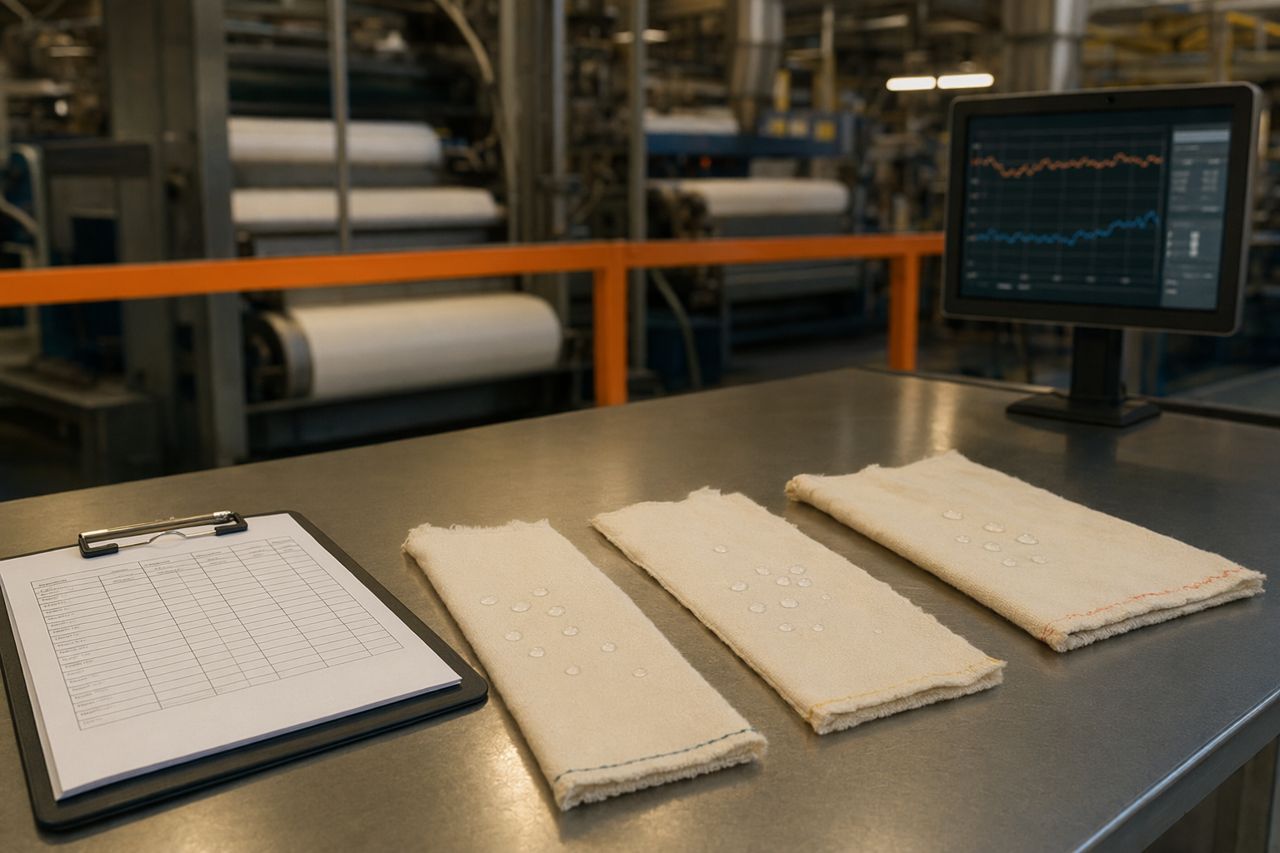
- Sample across the lot. Check early, middle, and late fabric sections; for open-width, include edge and center.
- Confirm wet-out. Look for rapid, even absorbency before scouring or dyeing.
- Track downstream behavior. Compare dyeing readiness, shade correction, handle, and reprocessing frequency.
- Record operator notes. Shift observations often explain the difference between a good lab result and a stable production result.
What good desizing should deliver
A controlled desizing program should give the mill more than starch removal. It should create a more predictable pretreatment platform.
Expected buyer value includes:
- More consistent wet-out before scouring and dyeing
- Lower risk of starch-related shade variation
- Reduced reprocessing caused by uneven absorbency
- Cleaner handoff between pretreatment and dyehouse teams
- Better fabric handle development in finishing
- More stable audit documentation for lot history and process control
- Easier troubleshooting when a lot behaves differently from standard
Rope or open-width: the best answer is process-specific
If your rope line is well managed, it may deliver dependable desizing at production scale. If your fabrics are crease-sensitive, shade-critical, or widthwise consistency is a recurring issue, open-width may provide better control.
The enzyme program should not force the mill into one route. It should strengthen the route you can control.
Request a quote for your desizing route
Share your fabric type, current route, dwell method, pH and temperature window, liquor ratio, and the problem you are trying to solve. Enzymebridge will review the application and recommend a mill-ready desizing enzyme approach for your line.