Reducing Reprocessing in Cotton Dyehouses Starts at Pretreatment
Dyehouse reprocessing is often treated as a dyeing problem. In cotton mills, the root cause frequently sits earlier: incomplete starch removal, uneven wet-out, carryover impurities, or pretreatment variation that only becomes visible after dyeing.
For a pretreatment manager, this is where control matters. A reliable desizing step helps keep fabric moving forward instead of looping back through correction, rewash, shade adjustment, or downgraded handling. As a textile desizing enzyme supplier for fabric mills, Enzymebridge focuses on the mill conditions that decide whether greige cotton is truly ready for scouring, bleaching, dyeing, and finishing.
Why reprocessing begins before the dye bath
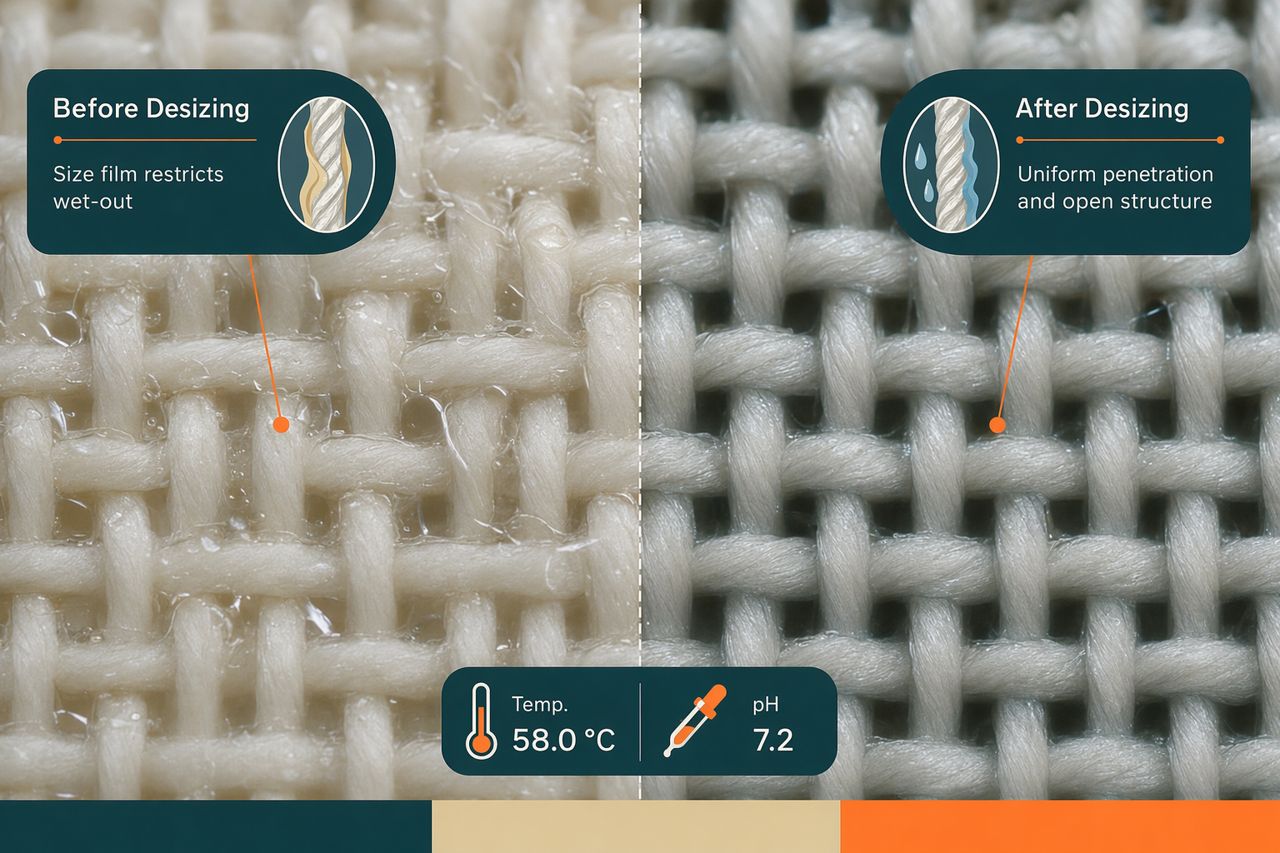
Cotton fabric may enter the dyehouse looking acceptable, but hidden variation from preparation can create shade risk. Starch-size residues can restrict liquor penetration, disturb absorbency, and create patchy dye uptake across the width or length of the fabric.
Common pretreatment-related triggers include:
- Incomplete starch-size breakdown on warp-heavy constructions
- Uneven wet-out from inconsistent enzyme contact
- Short or unstable temperature windows during desizing
- Excess residual size after high-speed preparation
- Variable liquor exchange in low-liquor-ratio systems
- Fabric-to-fabric differences that are not captured before dyeing
When these issues reach the dyehouse, operators often spend time compensating. The cost is not only chemicals and steam. It is machine occupancy, shade-lot delay, reinspection, off-standard inventory, and pressure on shipment dates.
The desizing step is a reliability checkpoint
A controlled enzymatic desizing program gives the mill a measurable preparation checkpoint before higher-value downstream processes begin. The objective is simple: remove starch-based sizing cleanly enough to support uniform wet-out and reduce unpredictable dyeing behavior.
For cotton mills, the most important control points are practical:
1. Contact across the full fabric width
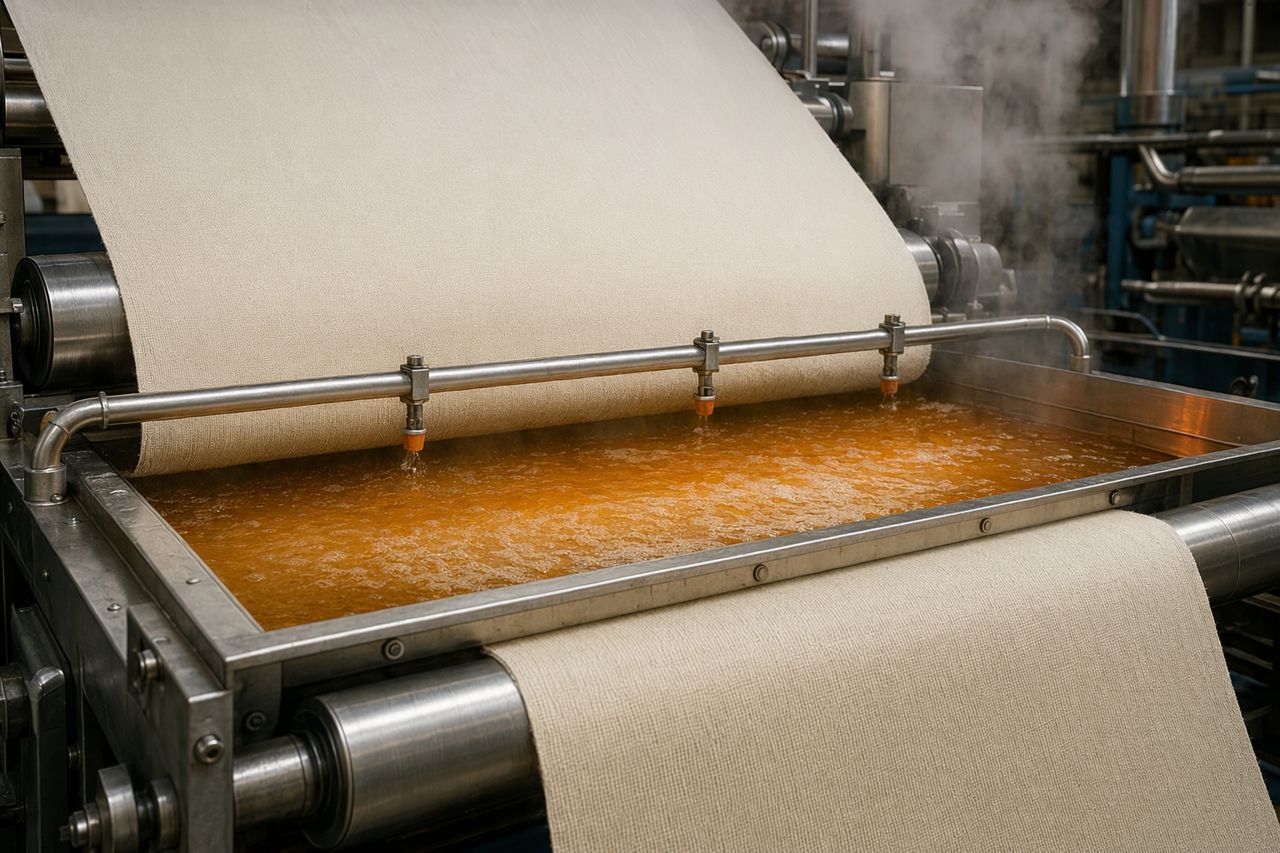
Desizing performance depends on even application, stable pickup, and liquor movement through the weave. Enzymebridge helps mills review padder condition, bath turnover, fabric speed, and batching or steaming conditions so the enzyme has the contact it needs.
2. A workable temperature window
Production rarely runs under textbook conditions for an entire shift. A desizing enzyme should support the mill’s real operating window, including start-up transitions, speed changes, and common line interruptions. The goal is not theoretical peak performance; it is repeatable starch removal under mill pressure.
3. Wet-out readiness before dyeing
Good desizing should make the next step easier. Fabric should wet evenly, move through scouring and bleaching more predictably, and enter dyeing with fewer absorbency surprises. This is especially important for reactive dyeing, pale shades, repeat orders, and shade families with tight tolerance.
4. Lower correction work downstream
When pretreatment is stable, the dyehouse sees fewer avoidable disturbances. Mills can reduce rewash loops, shade correction loads, and late-stage decision-making between reprocess, downgrade, or release.
What mills should track before blaming the dye recipe
Before changing a dye recipe, review the preparation record. The following checks often reveal whether pretreatment variation is contributing to reprocessing:
- Was the fabric construction changed without adjusting desizing conditions?
- Did the line run at a different speed or liquor ratio than the approved route?
- Were batching, steaming, or dwell conditions interrupted?
- Was wet-out checked consistently before scouring or bleaching?
- Did the issue repeat by roll position, lot, shift, or machine?
- Are starch removal checks documented in the same way across shifts?
A dyeing issue that repeats by lot or construction often points back to preparation. A shade issue that appears randomly may point to contact variation, bath control, or operational drift.
Enzyme selection should match the mill route
Not every cotton mill desizes the same way. Some operate continuous ranges. Others use pad-batch routes, rope processing, or varied liquor ratios across product groups. The enzyme program should fit the fabric mix and the plant’s preparation equipment.
Enzymebridge supports cotton mills with desizing enzyme solutions selected around:
- Cotton woven fabric constructions and starch-size load
- Continuous, semi-continuous, or batch pretreatment routes
- Practical temperature and pH conditions in the mill
- Required wet-out consistency for downstream dyeing
- Compatibility with existing scouring, bleaching, and wash-off strategy
- Documentation needs for customer, audit, and quality review
This is not about adding complexity. It is about making the preparation step easier to run, easier to verify, and easier to trust.
A pretreatment conversation that belongs before the next reprocess
If your dyehouse is seeing repeat correction cycles, shade complaints, or absorbency-related variation, the next improvement may not start at the dye machine. It may start with a tighter desizing program and clearer preparation evidence.
Enzymebridge works with cotton textile mills to review current operating windows, identify desizing weak points, and recommend enzyme options that support reliable starch removal and dyeing readiness.
Request a quote
If you are evaluating a textile desizing enzyme supplier for fabric mills, send your fabric type, pretreatment route, liquor ratio range, target temperature window, and current reprocessing concerns through the on-site request a quote form. We will review the operating context and respond with a mill-ready recommendation.