Water, Temperature, pH, and Dwell Time: The Four Levers of Desizing Stability
For a cotton textile mill, desizing is not a chemistry step in isolation. It is the handoff between weaving history and wet processing discipline. If starch removal is uneven, the next departments feel it: delayed wet-out, patchy scouring, higher shade-risk, harsher fabric handle, and avoidable reprocessing.
As a textile desizing enzyme supplier for fabric mills, Enzymebridge looks at desizing through the operating window that pretreatment teams actually manage: incoming water, bath temperature, pH, liquor ratio, dwell time, fabric loading, and line consistency.
This article focuses on four levers that determine whether enzymatic desizing stays stable from first shift to final lot.
Why desizing stability matters before dyeing
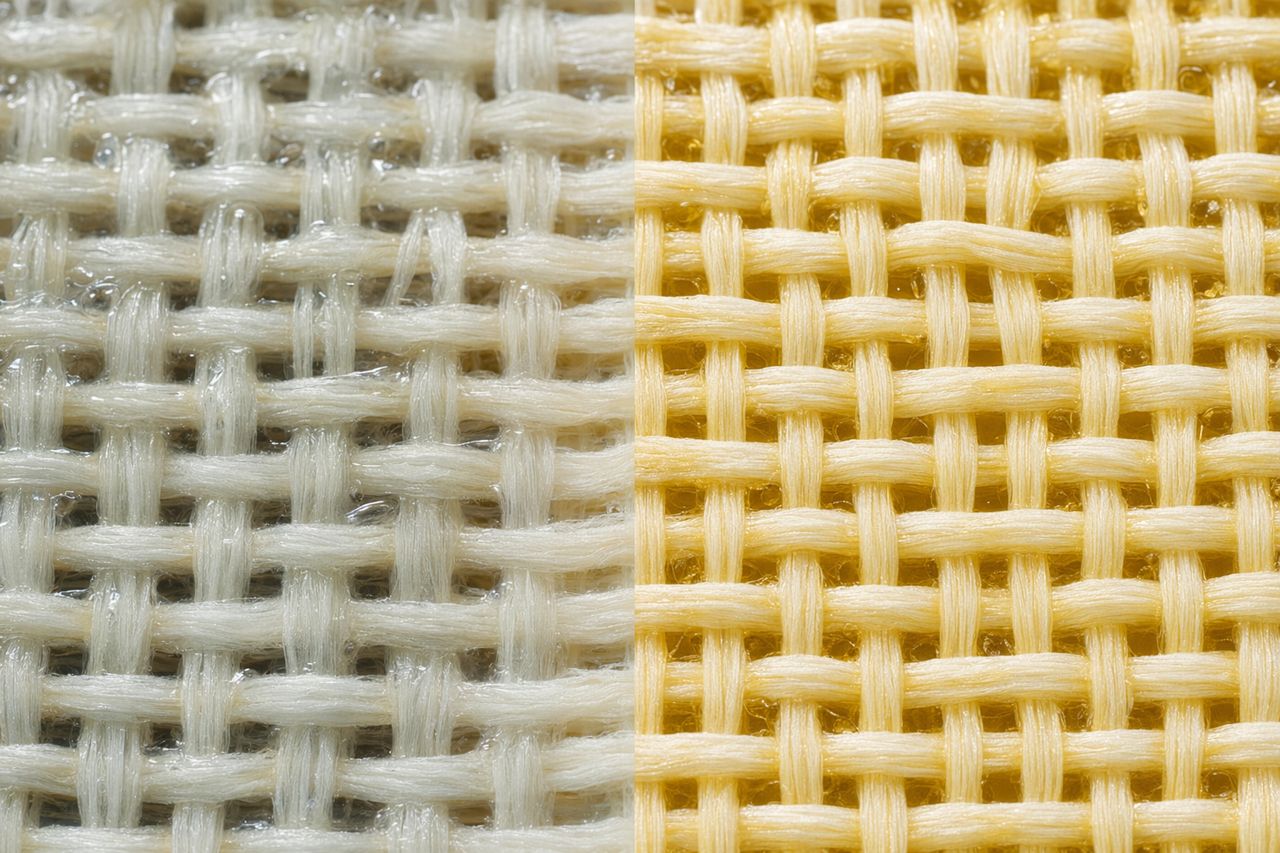
Starch-based size protects warp yarns during weaving. In pretreatment, that same protective film becomes a barrier. If it remains on the cotton surface or inside the yarn bundle, it can slow wet-out, trap impurities, and interfere with uniform chemical access in later stages.
Stable desizing supports:
- Faster and more consistent wet-out
- Lower reprocessing from residual size
- More predictable scouring and bleaching response
- Reduced shade variation risk before dyeing
- Better fabric handle without aggressive mechanical correction
- Cleaner audit records for controlled pretreatment conditions
The enzyme product matters, but the mill window around the enzyme matters just as much.
Lever 1: Water quality sets the starting condition
Water is the carrier for enzyme contact. If the water condition shifts, the same recipe can behave differently across lots.
Watch hardness, alkalinity, and carryover
High hardness can change bath behavior and interfere with consistent wetting. Alkalinity can push pH outside the preferred range. Residual chemicals from previous steps, poor tank cleaning, or recycled liquor can also affect enzyme performance.
For stable desizing, mills should track:
- Incoming water hardness trends by shift or supply source
- pH of prepared bath before fabric entry
- Conductivity shifts that indicate carryover or concentration changes
- Wetting agent compatibility with the enzyme system
- Reuse practices that may concentrate contaminants over time
Do not let liquor ratio hide poor contact
A low liquor ratio can improve resource efficiency, but only if circulation and fabric movement still deliver even enzyme contact. In rope, jigger, jet, or continuous pad-batch settings, the practical question is the same: does every meter of fabric see the same bath strength, temperature, and time?
If desizing failures appear in bands, seams, roll centers, or dense constructions, investigate liquor movement and fabric presentation before increasing chemistry.
Lever 2: Temperature must match both enzyme and fabric flow
Temperature is often treated as a number on a display. In production, it is a moving condition: tank heat-up rate, fabric entry temperature, bath recovery after loading, and dwell-zone loss all matter.
Keep the useful window steady
Enzymatic desizing works best inside a defined temperature window. Too cool, and starch breakdown may slow. Too hot, and the enzyme can lose effectiveness before contact is complete.
Pretreatment teams should verify:
- Actual bath temperature at fabric contact, not only tank setpoint
- Temperature drop after a new lot or cold fabric load enters
- Edge-to-center temperature variation on continuous ranges
- Dwell-zone insulation and cover discipline
- Heat stability during weekend restart or first-shift ramp-up
Avoid recipe creep from temperature instability
When temperature control is inconsistent, operators may compensate with longer holds, higher add-on, or repeat washes. Those adjustments can work for one lot and create risk on the next. A tighter temperature window usually gives a better return than pushing the recipe harder.
Lever 3: pH keeps the enzyme in its working lane
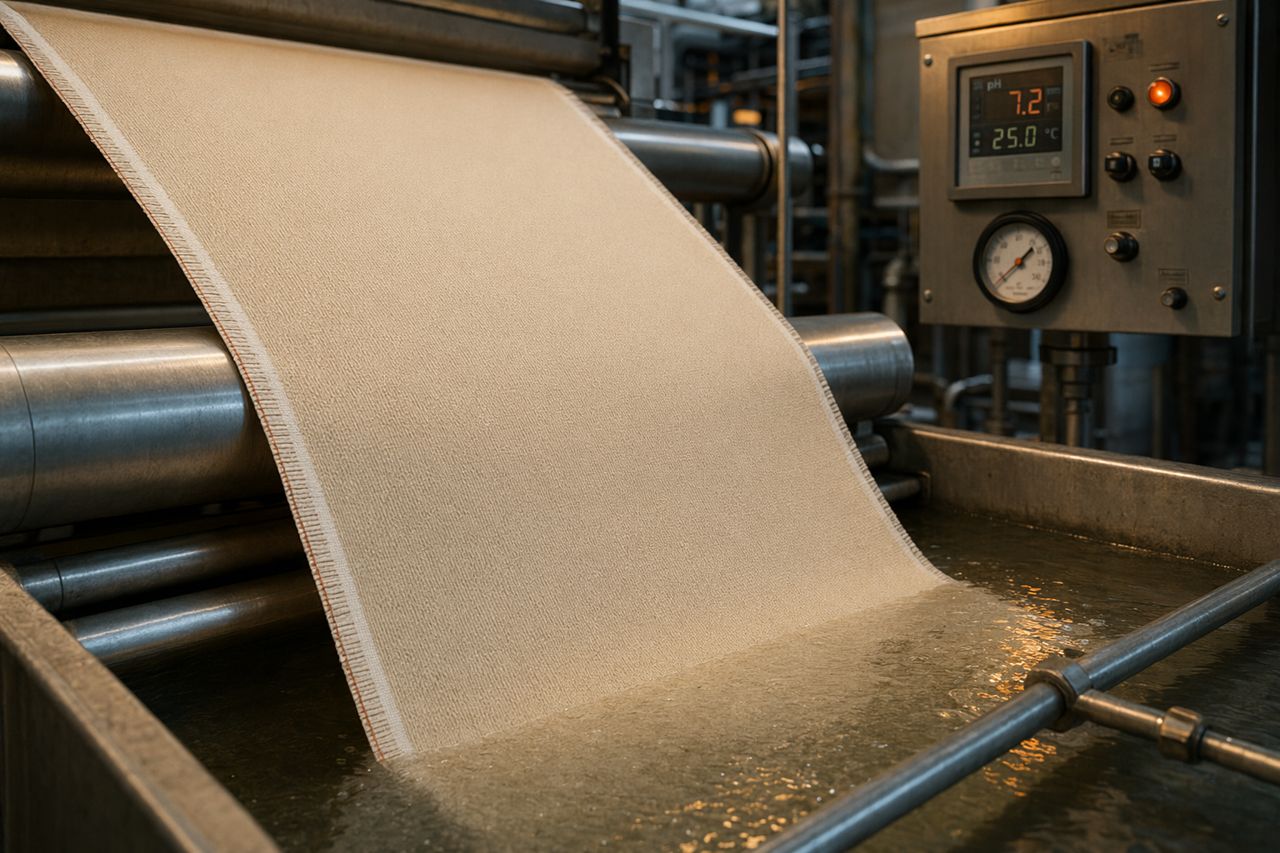
pH is a control point, not a paperwork value. A small pH drift can change desizing speed and predictability, especially when incoming water alkalinity or chemical carryover changes through the day.
Measure where the process changes
For batch systems, check pH after chemical addition and after fabric loading. For continuous systems, check pad liquor, trough turnover, and dwell-zone expression where practical. If pH is only checked at mix preparation, the actual fabric-contact condition may be missed.
Build pH control into changeovers
pH risk increases during:
- Changeover from heavily sized to lightly sized fabric
- Switching water source or recycled water ratio
- Restart after a hold or maintenance stop
- Running mixed constructions with different absorbency
- Using auxiliary packages from different suppliers
A stable desizing program defines the acceptable pH window, documents adjustment practice, and gives operators a clear hold-and-correct procedure.
Lever 4: Dwell time completes the removal, not just the recipe
Dwell time is the period where enzyme, water, temperature, and pH work together on the starch film. If dwell is shortened by higher line speed, poor batching discipline, or uneven roll build, the result is often partial starch removal even when the chemical recipe looks correct.
Match dwell to construction and size load
Heavy warp size, dense fabric, compact yarn, and poor initial absorbency may require a more conservative dwell window. Lighter constructions may clear faster, but the mill should avoid assuming that one dwell target fits every article.
Useful operational checks include:
- Line speed versus required contact time
- Pad pick-up consistency across width
- Batch roll wrapping and temperature retention
- Hold time discipline before wash-off
- Iodine-based residual starch checks at defined process points
Dwell failures often appear downstream
A desizing dwell issue may not be obvious at the desizing machine. It can show up as delayed wet-out in scouring, uneven bleach response, shade variation, or a fabric handle that feels less open than expected. That is why pretreatment teams should connect desizing records with downstream dyeing readiness.
A practical control map for mill teams
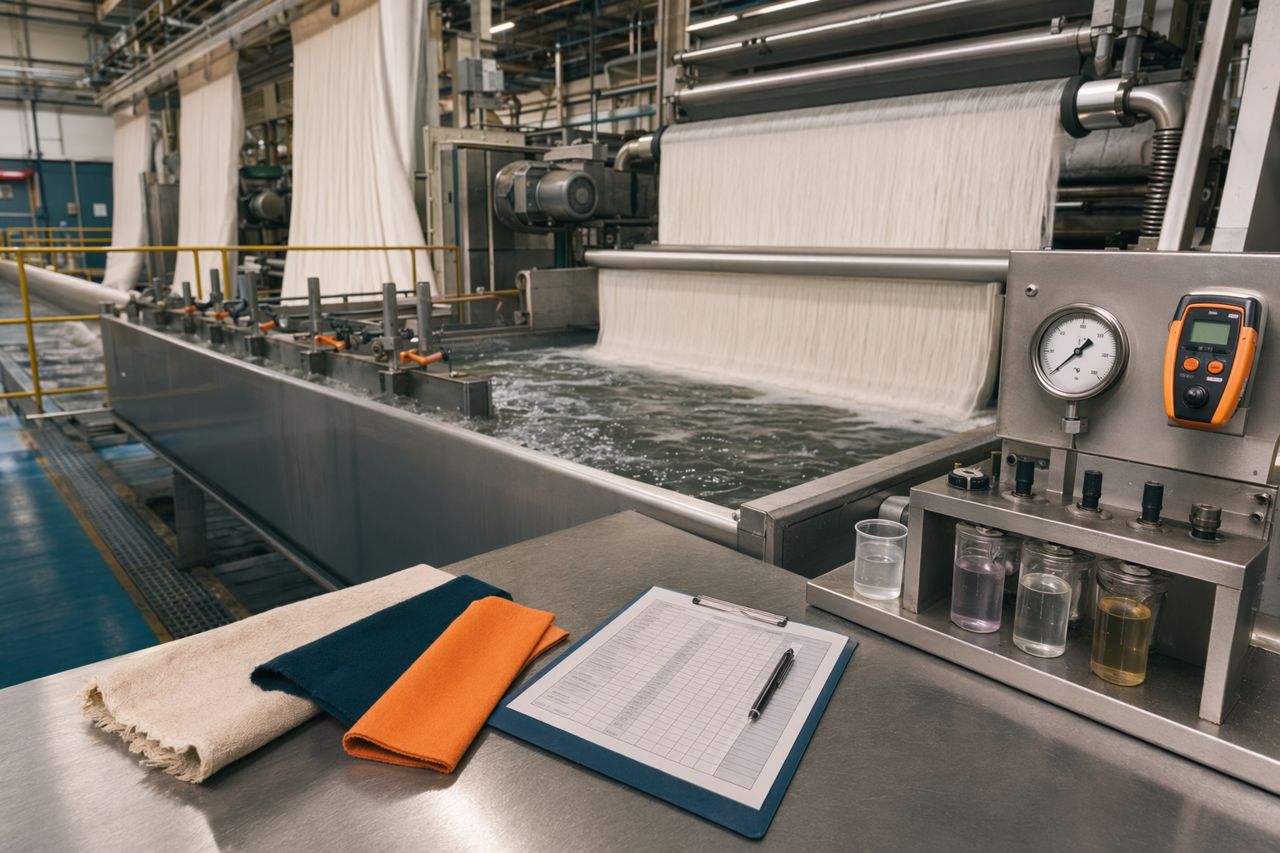
Use the four levers as a shift-level control map:
| Lever | Mill question | Production signal |
|---|---|---|
| Water | Is the bath carrier consistent today? | pH drift, conductivity change, poor wet-out |
| Temperature | Is the enzyme seeing the intended window at fabric contact? | Slow starch removal, restart instability |
| pH | Is the bath still in the working lane after loading and carryover? | Variable desizing across lots |
| Dwell time | Did the fabric receive enough contact under stable conditions? | Residual starch, reprocessing, dyeing risk |
The goal is not to add complexity. The goal is to make the process visible enough that operators can correct early instead of discovering residual size after value has already been added.
Where Enzymebridge fits
Enzymebridge supports cotton mills with desizing enzyme selection, application guidance, and documentation-ready process recommendations. We help pretreatment managers align enzyme choice with fabric construction, starch load, liquor ratio, temperature window, pH control, and downstream dyeing requirements.
For mill teams, the right supply partner should help answer practical questions:
- Which product window fits our equipment and operating temperature?
- How should we adjust for dense cotton constructions or high size load?
- What records should be kept for audit-ready desizing control?
- How can we reduce reprocessing without creating shade-risk downstream?
- Where should operators measure pH and temperature to catch drift early?
Request a quote for your desizing window
If your mill is reviewing desizing performance, Enzymebridge can help match an enzyme recommendation to your fabric mix, machine format, and pretreatment targets.
Use the on-site request a quote form and share your fabric construction, sizing type if known, process route, liquor ratio, temperature range, pH range, dwell time, and current pain points. We will respond with a mill-ready recommendation focused on stable starch removal and dyeing readiness.