The Sustainability Case for Enzymatic Desizing in Cotton Mills
For a cotton textile mill, sustainability is not a separate conversation from reliability. If starch-size is not removed evenly, the cost shows up in re-wet failures, harsh correction, shade-risk, extra rinsing, and fabric that reaches dyeing with uncertainty built in.
Enzymatic desizing helps mills address that problem at the root: controlled starch breakdown under practical mill conditions, with less dependence on severe chemical correction. For pretreatment teams, the sustainability case is strongest when it is tied to measurable operating outcomes — steady wet-out, fewer holds, smoother downstream processing, and documentation that supports customer audits.
Enzymebridge works as a textile desizing enzyme supplier for fabric mills that need more than a drum label. The focus is process fit: fabric construction, size load, liquor ratio, temperature window, pH control, dwell time, washing efficiency, and dyeing readiness.
Why desizing carries sustainability weight
Desizing sits early in the cotton pretreatment sequence, but its effect travels through the whole route. Poor starch removal can force the mill to spend more water, heat, chemicals, and machine time later. That is where sustainability losses become operational losses.
A controlled enzymatic desizing step can support:
- More uniform wet-out before scouring and dyeing
- Reduced reliance on aggressive correction chemistry
- Fewer reprocess loops caused by uneven absorbency
- Better fabric handle preservation compared with harsher routes
- More predictable downstream shade development
- Cleaner audit narratives around pretreatment control
The point is not to make pretreatment delicate. The point is to make it controlled.
What enzymatic desizing changes on the range
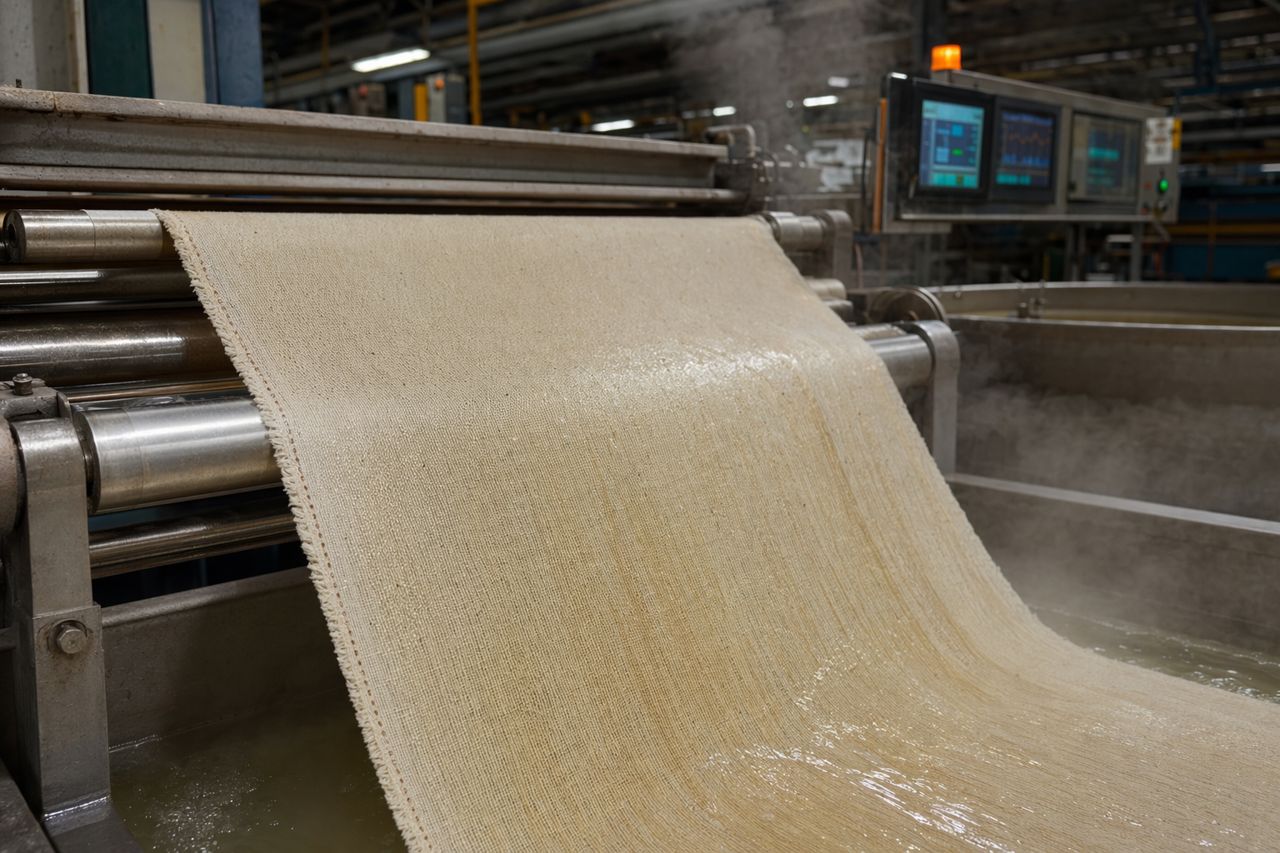
In many cotton mills, starch-based sizing protects yarn during weaving, then becomes an obstacle in wet processing. Enzymes are selected to break down starch-size into soluble fragments that can be washed away more readily.
For the mill team, the practical value is not theoretical biodegradability. It is the ability to run a defined desizing window that protects fabric flow and reduces surprises.
1. Cleaner wet-out before the next bath
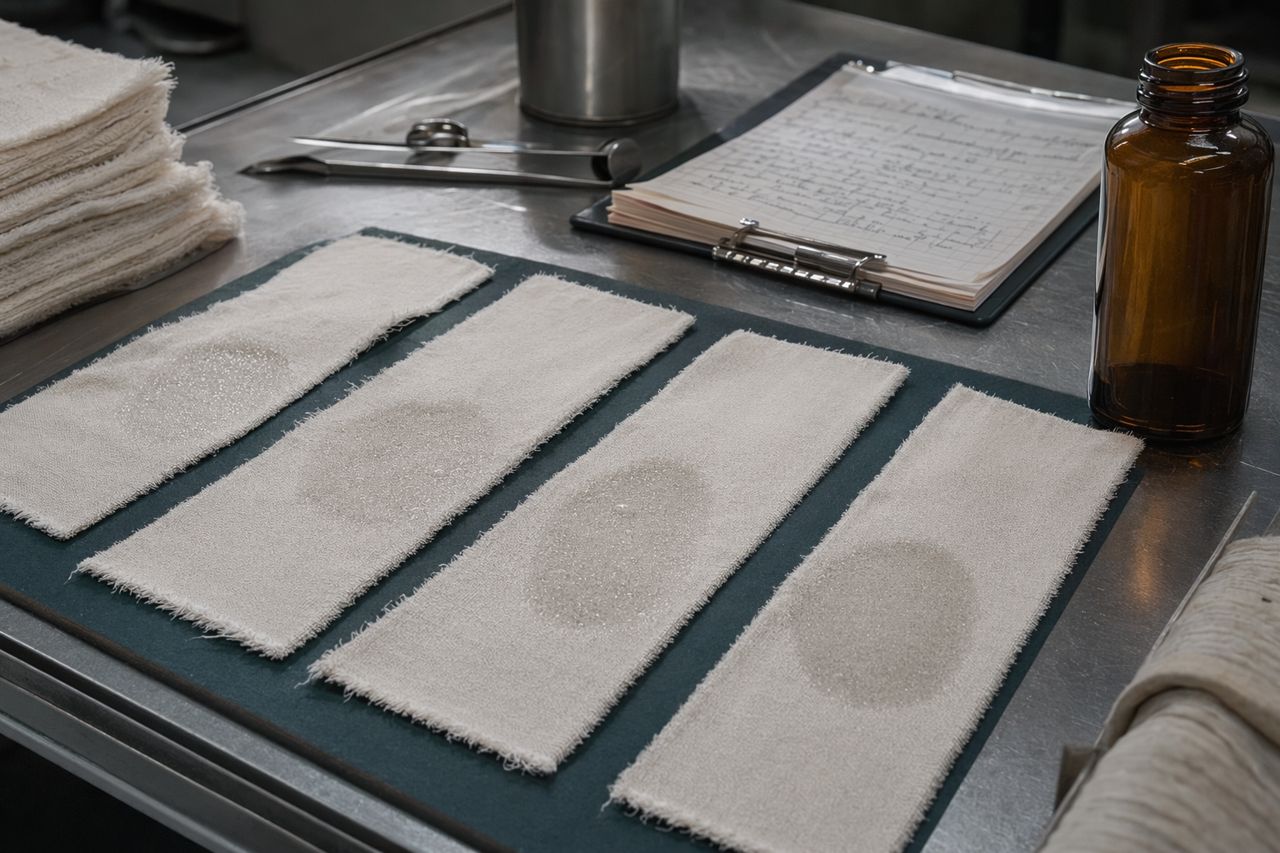
When residual size remains in patches, wet-out becomes uneven. That instability can carry into scouring, bleaching, mercerizing, and dyeing. Enzymatic desizing supports more consistent absorbency across the width and length of the fabric, which helps reduce side-to-center variation and batch-to-batch doubt.
2. Lower correction pressure
A harsh recovery step may remove stubborn residues, but it can also increase chemical load, fiber stress, wastewater burden, and schedule pressure. A well-matched enzyme system gives the pretreatment manager a narrower, more controlled path: break down starch where it sits, then wash it out efficiently.
3. Better use of existing equipment
Most mills are not asking for a sustainability idea that requires a new line. They need a route that can fit existing continuous, semi-continuous, or batch pretreatment assets. The right desizing enzyme program is built around machine reality: impregnation, pick-up, dwell, temperature stability, washing configuration, and shift-level control.
The sustainability gains buyers can actually defend
Sustainability claims need to survive internal review and customer audits. For enzymatic desizing, the strongest claims are linked to plant evidence rather than generic promises.
Mills typically evaluate value through:
- Reprocessing reduction after pretreatment
- Improved first-pass dyeing readiness
- More stable absorbency checks
- Lower need for corrective chemical treatments
- Shorter troubleshooting time between pretreatment and dyeing
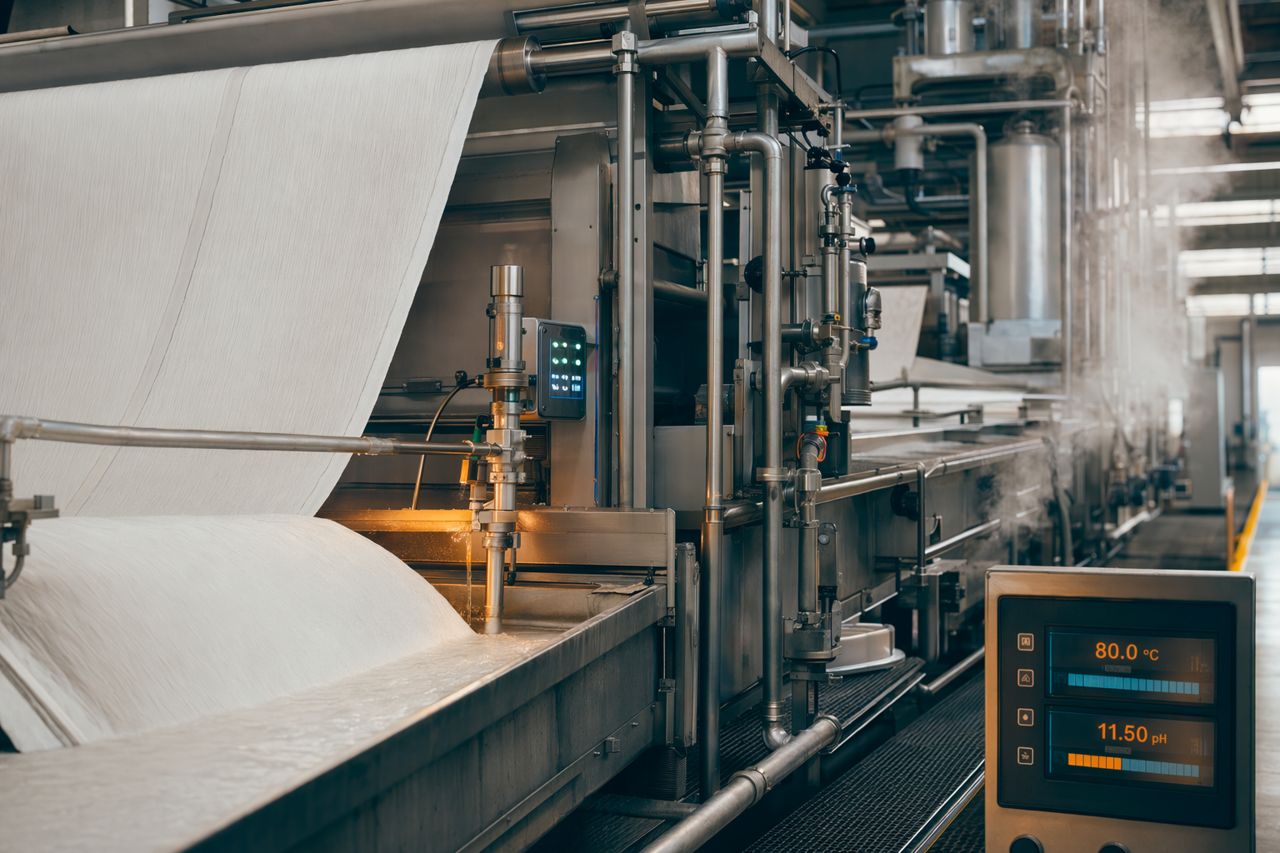
- Better documentation of pH and temperature control
- More consistent fabric handle for downstream finishing
These are the sustainability metrics that operations teams can connect to cost, capacity, and compliance.
Where enzyme selection matters
Not every cotton route needs the same desizing profile. A poplin program does not behave like a heavy twill. A mill processing high-size greige goods faces a different challenge than one running lighter constructions with tight shade tolerance.
Enzymebridge evaluates the fit around:
- Starch-size type and expected size load
- Fabric construction and yarn density
- Continuous or batch processing route
- Liquor ratio and mechanical action
- Available temperature window
- pH conditions before and after desizing
- Washing efficiency and water discipline
- Required absorbency and dyeing readiness targets
The goal is controlled starch removal without creating new friction for the wet processing team.
Process control is the real environmental lever
A desizing enzyme only delivers sustainability value when the process is held inside a reliable window. Under-treatment leaves residues. Over-correction wastes resources and can create unnecessary fabric stress.
That is why Enzymebridge supports pretreatment teams with practical process alignment rather than broad claims. The conversation should cover the actual mill route: how greige goods enter the line, where pH is adjusted, how dwell is secured, how washing is staged, and what the dyehouse sees afterward.
Good enzyme implementation is visible in the fabric. It shows in the wet-out, the handle, the steadiness of the next bath, and the reduction of avoidable correction.
Watch: the one-minute sustainability case
Faceless explainer video with voiceover, subtitles, and industrial still frames showing how enzymatic desizing supports cleaner starch removal, steadier wet-out, and downstream dyeing readiness in cotton mills.
What to prepare before requesting a quote
A useful quote should reflect your mill conditions, not a generic catalog choice. Before submitting the form, gather the details your pretreatment team already uses on shift:
- Fabric type and construction
- Approximate starch-size challenge or greige source pattern
- Current desizing route and machine type
- Liquor ratio or application method
- Temperature and pH window available on the line
- Dwell time constraints
- Washing configuration after desizing
- Main pain point: wet-out variation, reprocessing, shade-risk, handle, or wastewater pressure
With those details, Enzymebridge can recommend a desizing enzyme approach that fits your operating window and sustainability goals.
Build the sustainability case from the range outward
Enzymatic desizing is not a slogan. It is a practical way to remove starch-size more selectively, reduce downstream disruption, and support cleaner cotton pretreatment. For mills under pressure to improve resource use without sacrificing delivery discipline, that balance matters.
If your team is reviewing pretreatment chemistry, reprocessing losses, or dyeing readiness, Enzymebridge can help evaluate an enzyme route against your current mill reality.
Ready to compare options? Request a quote through the on-site form and include your fabric route, processing window, and current desizing challenge.