How Starch Size Residue Creates Dyeing Defects in Cotton Woven Fabric
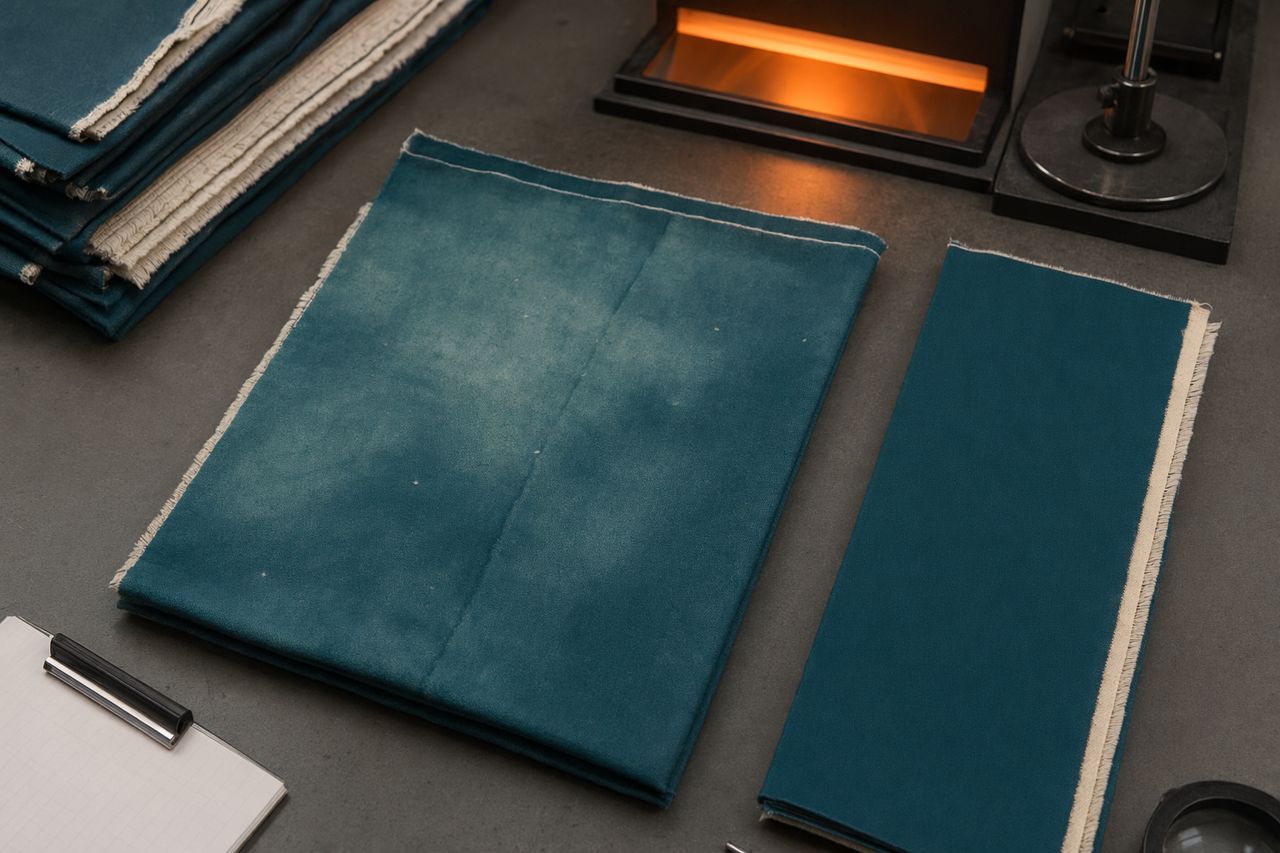
For a cotton woven mill, starch size residue is not just a pretreatment issue. It travels forward. It changes wet-out. It blocks scouring contact. It creates uneven dye access across warp and weft. By the time the fabric reaches dyeing, a small desizing gap can show up as shade variation, cloudy patches, white specks, poor levelness, or repeat reprocessing.
That is why selecting a textile desizing enzyme supplier for fabric mills is not only about removing size. It is about protecting downstream dyeing readiness under real production conditions: changing greige lots, variable size add-on, liquor ratio constraints, temperature windows, pH drift, and shift-by-shift process pressure.
Enzymebridge works with cotton textile mills that need reliable starch breakdown, consistent wet-out, and documented pretreatment control before fabric enters scouring, bleaching, dyeing, or continuous finishing.
Where starch residue hides in woven cotton
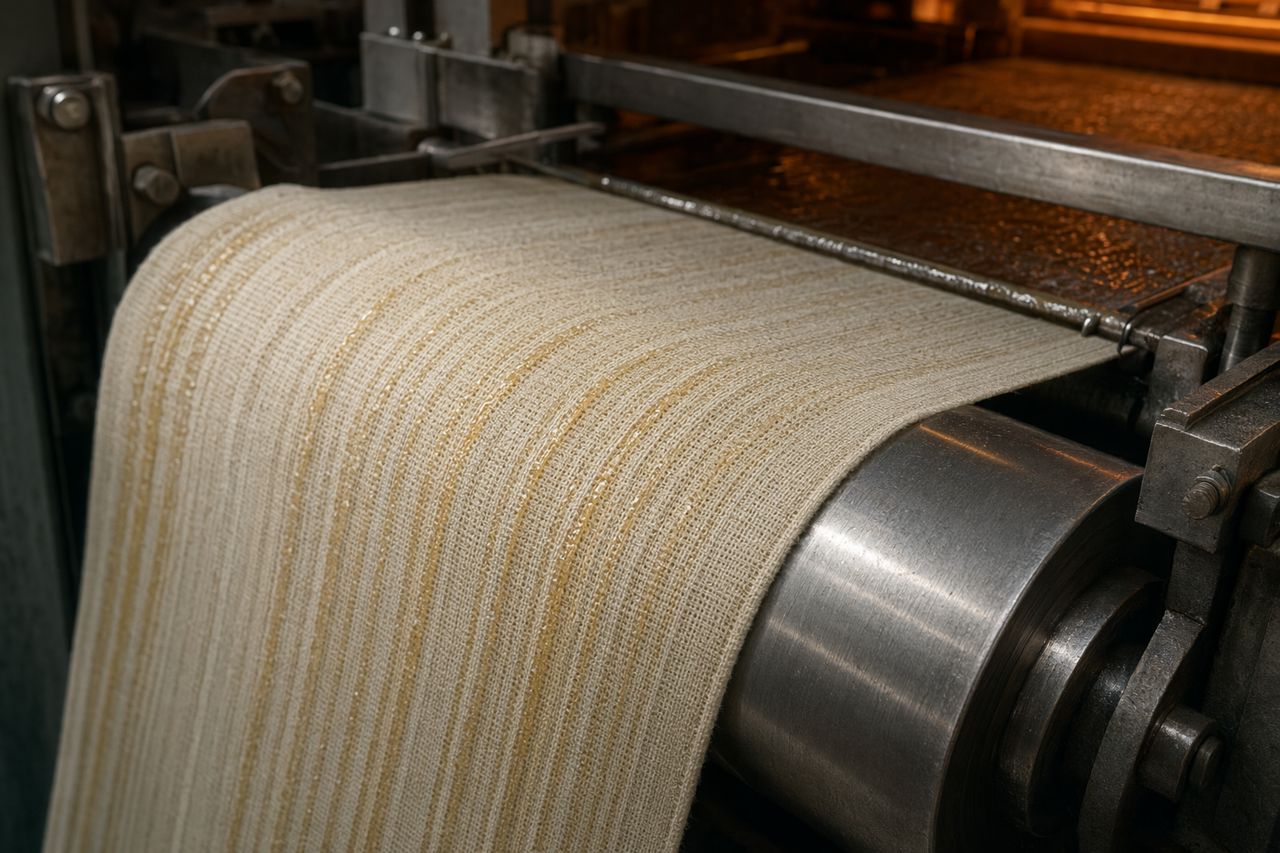
Starch size is applied to protect warp yarns during weaving. After weaving, that same protective film becomes a barrier. If it is not fully loosened and removed, residue can remain:
- Inside yarn bundles, not just on the fabric surface
- Along denser warp zones where penetration is slower
- In crease lines, rope marks, or folded areas
- Near selvedges where liquor movement may be less uniform
- In compact constructions with high yarn count
- On lots with heavier or mixed size systems
The visual fabric may look acceptable after desizing, especially when wet. The problem often appears later, when dye tries to level across areas that did not wet out or scour evenly.
How starch residue becomes a dyeing defect
Starch residue affects dyeing in several connected ways. The defect may appear in the dye bath, but the root cause often sits earlier in pretreatment.
1. Poor wet-out consistency
Residual starch reduces absorbency. Some areas take up liquor quickly; others resist penetration. This creates uneven chemical contact during scouring and bleaching, then uneven dye access during coloration.
Common mill symptoms include:
- Delayed sinking or inconsistent drop behavior
- Patchy absorbency across the width
- Variable wet pick-up after padding
- Shade clouds after reactive dyeing
- Localized pale areas after washing-off
When wet-out is inconsistent, dyeing becomes less forgiving. Recipe discipline may be correct, but the fabric is not equally ready to receive dye.
2. Blocked scouring performance
Scouring removes waxes, oils, pectins, and other natural cotton impurities. Starch residue can shield those impurities from the bath. This leaves uneven hydrophilicity across the fabric.
The result is not always dramatic. It may appear as small variations that become visible only after dyeing, mercerizing, or finishing. For mills running tight shade tolerances, that small pretreatment variation can become a claims risk.
3. Specks, streaks, and unlevel appearance
When size fragments detach unevenly, they can contribute to specks or small resist marks. If residue is distributed in streak-like patterns from weaving or rope movement, the finished shade may show corresponding lines.
Operators may describe the fabric as:
- Grainy
- Cloudy
- Uneven across the width
- Slightly resist-marked
- Dirty after dyeing despite normal washing
These symptoms are easy to misread as dye compatibility, salt addition, circulation, or washing-off issues. Those factors matter, but pretreatment readiness should be checked early.
4. Higher reprocessing load
A failed desizing stage creates downstream cost. Reprocessing consumes time, water, steam, chemicals, inspection capacity, and machine availability. It also puts fabric handle at risk.
Repeated corrective treatment can lead to:
- Harsher touch
- Strength concern on sensitive constructions
- Increased lint or surface disturbance
- Longer delivery lead time
- More shade matching work
- Extra audit explanation for quality deviation
Reliable enzymatic desizing helps reduce these avoidable loops by improving starch removal before the fabric reaches higher-value steps.
Why enzymatic desizing is preferred for cotton woven pretreatment
Enzymatic desizing targets starch under controlled processing conditions. For cotton mills, the value is practical: effective starch breakdown with less aggressive treatment than harsh chemical routes.
A well-matched desizing enzyme program supports:
- More consistent wet-out before scouring and bleaching
- Cleaner preparation for reactive, vat, sulfur, and pigment routes
- Reduced risk of shade variation linked to pretreatment gaps
- Better fabric handle protection compared with over-correction
- More stable results across batch, semi-continuous, or continuous ranges
- Easier documentation for internal quality systems and buyer audits
The right enzyme choice depends on the mill’s actual operating window. Temperature, pH, dwell time, fabric construction, size load, liquor ratio, and washing efficiency all affect the final result.
Process points that decide desizing reliability
Temperature window
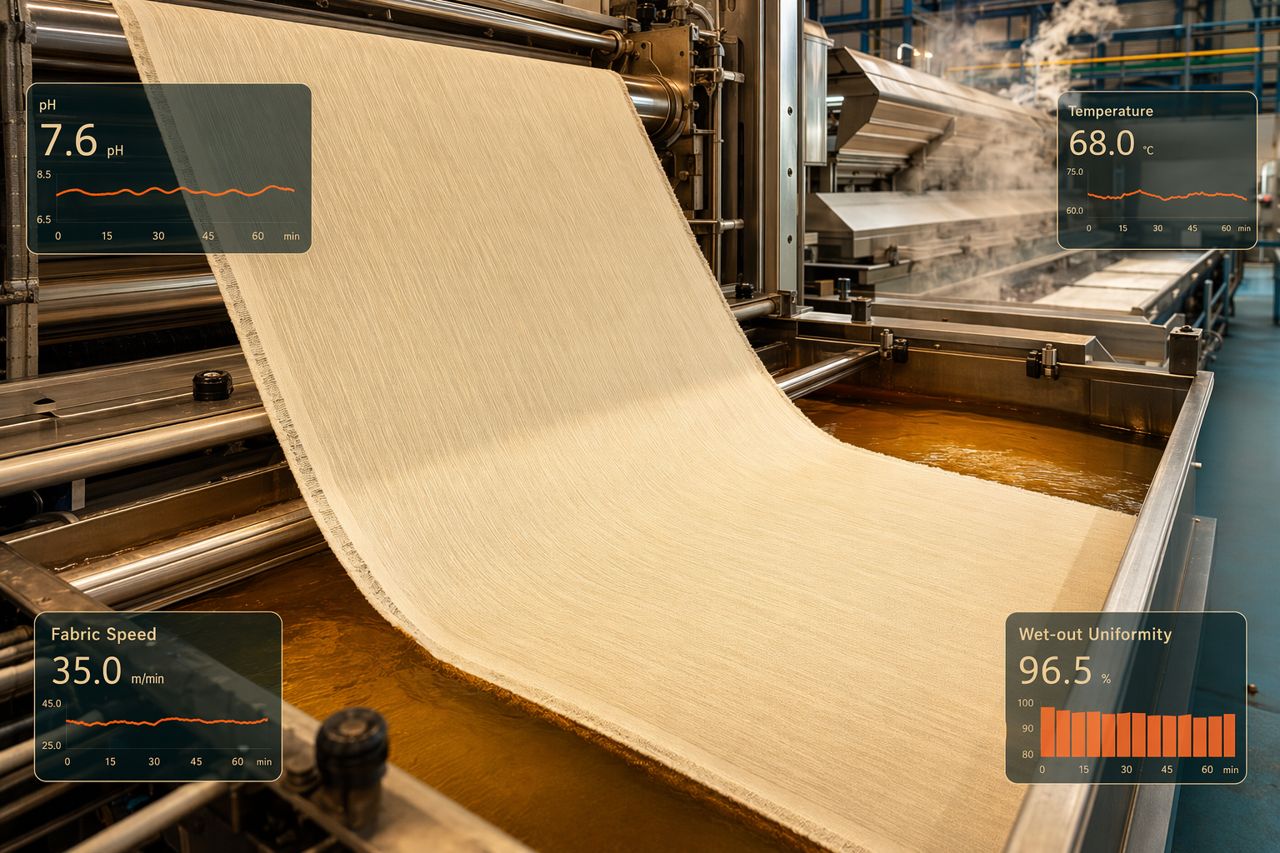
Enzymes perform best within defined temperature ranges. If the bath runs too cool, starch breakdown can slow. If the bath is too hot for the selected enzyme, performance may drop. Mills need a product matched to their working range, not a lab-only condition.
pH control
pH drift can reduce desizing consistency. Pretreatment managers should confirm that the chosen enzyme fits the mill’s water profile, chemical sequence, and process route.
Dwell time and fabric travel
Continuous fabric travel requires enough contact time for penetration and starch conversion. In rope or open-width processing, dwell time variation can create uneven results if the enzyme system is not robust.
Liquor movement and penetration
Dense woven cotton needs wetting and bath movement. If liquor cannot reach the yarn interior, starch can remain inside the structure even when surface checks look acceptable.
Washing after desizing
Desizing does not end when starch is broken down. Solubilized residues and fragments must be removed effectively. Poor washing can carry residue forward into scouring and dyeing.
Signs your mill should review desizing control
Consider reviewing your desizing enzyme and process settings if your mill sees:
- Recurring pale patches after dyeing
- Inconsistent absorbency across fabric width
- Higher-than-normal shade correction or re-dyeing
- White specks or resist-like marks on cotton woven goods
- Batch-to-batch variation despite stable dyeing recipes
- Good lab dye results but unstable bulk production
- Extra scouring intensity needed to reach acceptable wet-out
- Buyer complaints that trace back to pretreatment variation
The review should include greige source, size type, fabric construction, machine route, bath profile, washing stages, and downstream defect records. A supplier that understands mill reality can help connect the process data to the visible fabric result.
What Enzymebridge supports
Enzymebridge supplies textile desizing enzyme solutions for cotton fabric mills that need dependable starch removal without creating unnecessary process stress.
Our support focuses on operational outcomes:
- Matching enzyme selection to mill temperature and pH windows
- Improving wet-out consistency before scouring and bleaching
- Reducing dyeing defects linked to residual starch size
- Supporting batch, semi-continuous, and continuous pretreatment routes
- Helping teams document process conditions for audit readiness
- Reducing avoidable reprocessing while protecting fabric handle
We do not treat desizing as an isolated chemical addition. We look at how starch removal affects the next machine, the next shade, the next inspection table, and the next delivery commitment.
A practical desizing checklist for cotton woven mills
Before moving greige cotton into dyeing, confirm:
- The enzyme is suited to the mill’s actual bath temperature and pH.
- Fabric has enough dwell time for starch breakdown.
- Wetting is uniform across selvedge, center, and dense zones.
- Washing after desizing removes loosened residues effectively.
- Absorbency is checked before higher-value processing.
- Defect logs connect dyeing issues back to pretreatment conditions.
- Shift teams record key process settings consistently.
Small improvements in this checklist can reduce shade-risk and rework pressure across the whole finishing line.
Request a quote for mill-ready desizing support
If starch residue is creating dyeing defects, shade variation, or reprocessing pressure in your cotton woven line, Enzymebridge can help review your process window and recommend a desizing enzyme fit for your route.
Request a quote through the on-site form and include your fabric construction, processing route, temperature window, pH range, and current defect pattern. We will respond with a practical recommendation for your mill conditions.